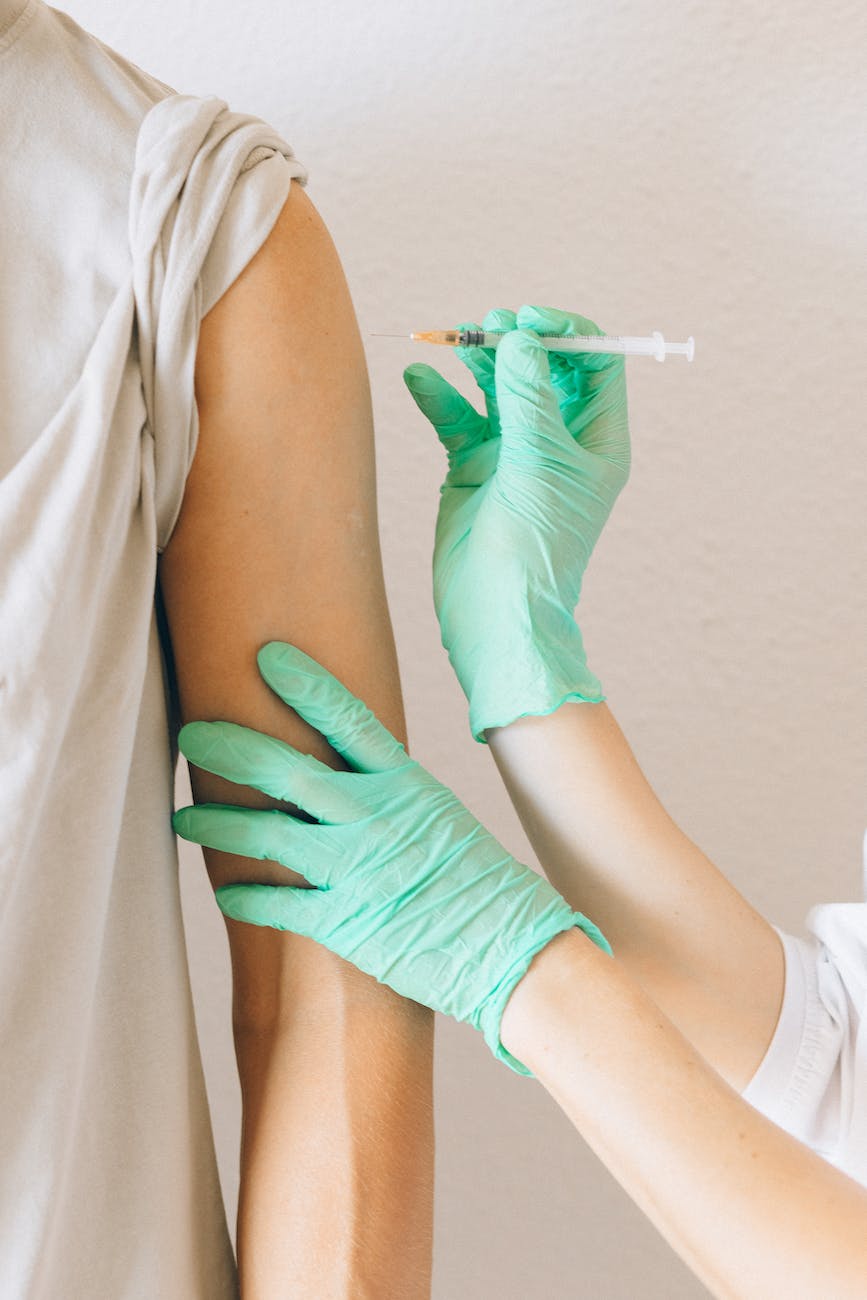
As more and more data has become available, many Americans have begun to have doubts about the very efficacy of the Covid-19 vaccine
Let us all travel back in time to early Spring of 2020. We were alarmed at media reports of a new and potentially deadly outbreak of an heretofore unknown virus, COVID-19. Also known alternately — at least in the early reporting of what would officially be termed a “pandemic” — as Coronavirus or the Wuhan Flu based on its suspected location of origin.
That latter term quickly fell out of favor as it was deemed insensitive to those of Chinese descent, or worse, as outright racist. As an interesting aside, we still refer to the the influenza outbreak of 1918 as the “Spanish Flu” without any such qualms. But I digress. The entire world was made to understand that this new dread disease, unlike previous false alarms of over-hyped maladies such as Swine Flu, Avian Flu, or West Nile, was already infecting millions globally.
We witnessed the heavy-handed measures that the Chinese Communist Party undertook to lockdown entire cities, beginning with the epicenter in Wuhan, and the extraordinary and draconian measures taken to isolate those suspected of having contracted the virus, or even merely exposed to it. We wondered if something like that was coming to America’s shores. Many of us were concerned and some of us were outright fearful. How can we combat this dread disease that is hospitalizing and killing people throughout the world?
The initial answer was lockdowns in most American cities as recommended by national health officials, the Center for Disease Control and the World Health Organization. Businesses were closed to in-person transactions, employees worked from home, our vulnerable elderly population was isolated in care facilities, churches were made to cease corporate worship services, no concerts, no dining out, no skateparks, no running on the beach, nothing. We dutifully waited out what we thought would be the worst while a vaccine was quickly developed to give us all the hoped-for herd immunity from the dread virus and prevent its spread to our friends and loved ones.
When vaccines were made available from the large pharmaceutical companies in late 2020 and early 2021, we were collectively elated. We were told repeatedly that getting vaccinated would not only prevent us from contracting COVID-19 but also prevent it from spreading to others. We lined up to get the “jab” — one or two doses depending on which vaccine brand — hoping our worries were over. Public institutions like our military, local and state governments, colleges and universities, school districts, and many private employers mandated that employees receive the vaccine. Refusal to comply with vaccination mandates was considered “anti-vax” or “anti-science,” and even unpatriotic behavior which could lead to job termination.
All the while, the vaccine narrative was changing. As time passed, healthcare officials began admitting that the vaccine wouldn’t necessarily prevent an individual from getting sick, but it would lessen the symptoms and perhaps prevent hospitalization. By 2022, we were urged to get a booster shot, then a second booster as the virus continued to mutate.
For those of us who are old enough to recall the ravages of Polio on previous generations and the incredible vaccine discovery by the legendary Dr. Jonas Salk, the very word, “vaccine,” carried with it a near-miraculous connotation. In our understanding of vaccine, it did indeed prevent the vaccinated person from getting the disease and it also prevented the spread. Once the entire world population received it, the disease was eradicated.
But this Covid “vaccine” apparently meant something else. It did not prevent the illness, as so many of us can testify. It did not prevent its spread. In fact, it may also have come with some serious health risks that we are only now beginning to understand. These risks were either unacknowledged or downplayed in the rush to vaccinate the population. We have now come to learn that these side effects can be quite serious, and in some cases as bad as or worse than the virus itself.
Not everyone in the medical field was unanimous in their opinion about the disease or the efficacy of the vaccine. We were told we must “follow the science,” but many scientists including noted epidemiologists attempted to speak out against the prevailing narrative. They were shut down by their peers, cancelled on social media, accused of “disinformation” or “misinformation” by government censors and their media allies, and even fired from their jobs for daring to question the official line. This rush to judgement impeded true science. The very notion of “settled science” is antithetical to free and necessary scientific inquiry.
As more and more data became available, many Americans began to have doubts about the very efficacy of the vaccine. So much of what was told to us by healthcare authorities turned out to be overstated or outright misinformation. In some notable instances, the very people we trusted most at the highest levels were even dishonest about the very origins of the disease (Wuhan lab leak versus now largely discredited wet market transmission). In so doing these leaders caused great harm to the confidence the public placed in the medical community. For many, that trust has been replaced with skepticism or outright distrust.
A recent poll conducted in May 2023 by Pew Research regarding what Americans think about COVID-19 vaccines, reveals that more than a third of Americans (36%) think the risks outweigh the benefit. (https://www.pewresearch.org/science/2023/05/16/what-americans-think-about-covid-19-vaccines/#:~:text=a%20big%20problem.-,62%25%20of%20Americans%20say%20positives%20of%20COVID%2D19%20vaccines%20outweigh,outweigh%20the%20benefits%20(36%25). That’s an alarmingly high number. It will make it that much more difficult to convince the populace to seek vaccination when an equally deadly pandemic strikes in the future.
Health officials at the highest level — WHO, CDC, and several national governments — owe it to the world to finally come clean about the origin and nature of this pathogen and be honest about the efficacy and known risks of the vaccines. Only then can we begin to rebuild the broken trust with the public through transparency and honest dialogue.
 Going Rogue